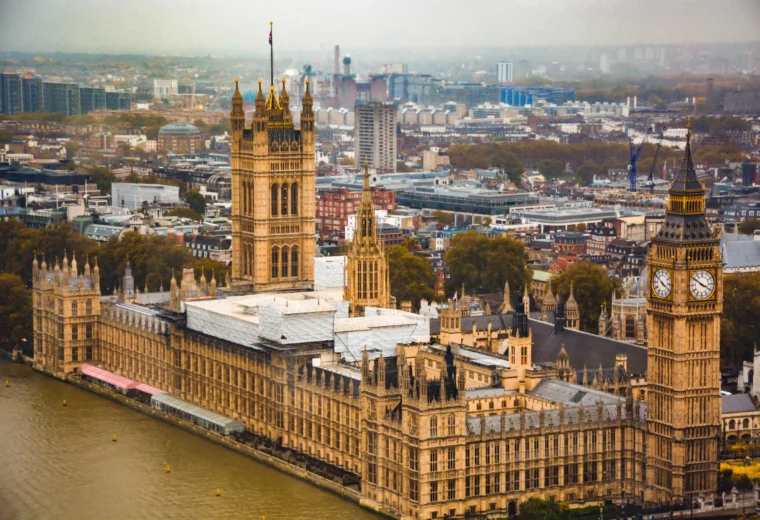

From the Steel Industry (Nationalisation) Bill to Great British Railways, the latest legislative agenda marks a profound shift toward direct state intervention in the UK economy.
The 2026 King’s Speech delivered to the Houses of Parliament represents a definitive, historic break from four decades of prevailing British political orthodoxy. For years, the fundamental consensus in Westminster—largely shared across the major parties, albeit with varying degrees of enthusiasm—has been that the state should act primarily as a regulator and an enabler of free markets, stepping out of the way of private enterprise. That consensus has now been formally discarded. The legislative agenda set forth by the government heralds the unapologetic return of the "active state." Driven by the compounded pressures of economic stagnation, geopolitical insecurity, and crumbling public infrastructure, the government has tabled an aggressive suite of bills designed to reshape markets, nationalise critical industries, and command capital investment from the centre.
This is not merely a tweak to existing policy; it is a structural realignment of the British economy. The language of the Speech itself was striking in its bluntness, declaring that the UK's economic security depends on the state "shaping markets" and deploying its power in partnership with business. From the highly controversial Steel Industry (Nationalisation) Bill to the establishment of Great British Railways and the ambitious Energy Independence Bill, the state is demanding a seat in the boardroom and the factory floor. The political gamble is immense. The government is betting that a tired, frustrated electorate will embrace state intervention as the only cure for broken public services and flatlining living standards. This article examines the core pillars of the 2026 legislative agenda and the massive execution risks inherent in this new era of British statecraft.
The Infrastructure Mandate: Railways, Roads, and Aviation
Central to the government’s economic strategy is a recognition that the UK’s physical infrastructure acts as a heavy brake on national productivity. Successive administrations have suffered from a chronic inability to build major projects at pace, bogged down by planning delays, spiralling costs, and local opposition. The 2026 legislative programme seeks to bulldoze through these blockages. The Highways (Financing) Bill aims to rapidly accelerate the construction of critical arteries, explicitly citing the long-delayed Lower Thames Crossing as a priority. Simultaneously, the Civil Aviation Bill is designed to finally unlock the economic benefits of airport expansion, an issue that has paralysed Westminster for decades.
However, the most significant structural change comes in the form of the Railways and Passenger Benefits Bill. This legislation will finally establish 'Great British Railways', effectively ending the fragmented, highly complex franchise system that has governed the network since privatisation in the 1990s. By bringing track and train operations under a single, unified public body, the government hopes to eliminate the structural inefficiencies and poor passenger experiences that have plagued British commuting. Furthermore, the introduction of the Northern Powerhouse Rail Bill indicates a renewed commitment to rebalancing the economic geography of the UK, promising a "fair deal for the North." The underlying theory is that only the financial firepower and legislative authority of the central state can deliver infrastructure on this scale. The risk, of course, is that the state assumes vast liabilities and operational risks in an environment where major public projects frequently run over budget and behind schedule.
Industrial Strategy and the Nationalisation of Steel
Perhaps the most ideological and economically startling component of the King’s Speech is the Steel Industry (Nationalisation) Bill. For decades, the UK steel industry has been trapped in a cycle of decline, outcompeted by heavily subsidised foreign producers and hampered by high domestic energy costs. Previous governments have offered ad-hoc bailouts and temporary relief, strictly avoiding direct ownership. The current administration has abandoned that reticence. By taking "all action necessary to safeguard the domestic production of steel," the state is explicitly declaring that certain foundational industries are too geopolitically critical to be left to the mercy of global markets.
This nationalisation is framed entirely in the context of national security and resilience. The government argues that a sovereign nation cannot rely on international supply chains for the primary material required for defense manufacturing, infrastructure, and the green energy transition. However, bringing the industry into public ownership presents formidable challenges. The state is acquiring an industry that requires tens of billions of pounds in capital expenditure to transition from highly polluting blast furnaces to modern, electric arc technology. The Treasury must now figure out how to finance this green transition without violating its own fiscal rules. Furthermore, this move sends a complex signal to global capital markets regarding the UK’s openness to private enterprise. The government must convince investors that this is a targeted intervention for national security, rather than the vanguard of a broader assault on private property rights.
Constitutional Accountability and the Hillsborough Law
While the economic interventions dominate the headlines, the King’s Speech also contained profound constitutional and administrative reforms aimed at repairing the fractured social contract between the state and the public. Chief among these is the Public Office (Accountability) Bill, widely referred to as the Hillsborough Law. This legislation introduces a strict, statutory "duty of candour" for all public servants and authorities. It is a direct response to a series of high-profile institutional failures and cover-ups—most notably the Hillsborough disaster and the Post Office Horizon scandal—where organs of the state actively concealed the truth to protect their own reputations.
The Hillsborough Law represents a fundamental shift in the legal obligations of the civil service and public bodies. It demands proactive transparency, effectively criminalising the act of institutional obfuscation during public inquiries or legal proceedings. Alongside this, the government is introducing the Removal of Peerages Bill, a populist measure designed to clean up the House of Lords and demonstrate a commitment to the "highest standards of trust in public office." Taken together, these bills acknowledge a dangerous deficit of trust in British institutions. The government recognizes that if it intends to wield significantly more power over the economy and public life, it must simultaneously subject itself to much harsher standards of accountability and transparency.
Energy Independence and the Future of Housing
The final pillar of the government’s strategy revolves around securing the basic foundations of domestic life: energy and housing. The Energy Independence Bill is framed as an economic and defensive imperative. Driven by the recent shocks in global gas and oil markets, the legislation seeks to rapidly scale up homegrown renewable energy production. The rhetoric is explicitly geopolitical: "to ensure that enemies of the United Kingdom cannot attack the economic security of the British people." This involves massive state support for offshore wind, nuclear power, and grid modernization, positioning the state as the primary catalyst for the net-zero transition.
Simultaneously, the government is intervening aggressively in the fractured housing market. The Social Housing Renewal Bill promises long-term capital investment to rebuild a depleted stock of social housing, moving away from a pure reliance on the private sector to house the most vulnerable. Crucially, the Commonhold and Leasehold Reform Bill aims to finally dismantle the archaic, highly exploitative leasehold system, including the capping of ground rents. This is a direct assault on the rentier economy, attempting to transfer power and equity back to homeowners. Combined with the Clean Water Bill, which targets the heavily criticized water utility sector, the message is clear: industries that extract value from captive domestic markets without delivering adequate infrastructure or fairness will face the full regulatory and legislative wrath of the state.
Conclusion: The Gamble of the Active State
The 2026 King’s Speech is a document of immense ambition and equally immense risk. The government has correctly diagnosed the central maladies of modern Britain: failing infrastructure, insecure energy supplies, a hollowed-out industrial base, and a pervasive lack of trust in public institutions. Its proposed cure is the unapologetic deployment of an active, interventionist state.
However, legislating for state control is entirely different from executing state competence. By taking ownership of the railways and the steel industry, and by assuming responsibility for massive infrastructure delivery, the government can no longer blame market failures or private sector incompetence when things go wrong. Every delayed train, every budget overrun on a new road, and every failure in the energy grid will now be laid directly at the door of Downing Street. The success of this legislative agenda depends entirely on whether the British state actually possesses the capacity, the talent, and the commercial acumen to actively manage a complex 21st-century economy. If it succeeds, it will rewrite the rules of Western social democracy. If it fails, it will bankrupt the Treasury and shatter what little faith remains in the political system.