As natural gas prices soar and the Financial Policy Committee modernises capital frameworks against long-term climate damages, Threadneedle Street faces an acute test of its monetary and systemic strategy.
The British economy has entered the summer of 2026 walking a precarious tightrope. For much of the year, there was a quiet, prevailing assumption among City analysts and institutional investors that the inflationary fever of the early 2020s had finally broken. Wage growth in the private sector had begun to cool, dropping toward the 3 per cent mark. Consumer-facing employment showed signs of softening, and the broader macroeconomic data suggested that the UK was transitioning into a period of monetary stabilisation. The expectation was that the Bank of England would safely hold the Bank Rate, with markets tentatively pricing in a return to rate cuts by 2027. However, the economic reality of July 2026 has rapidly upended these models. The convergence of a sudden, severe spike in global energy prices and an increasingly urgent reckoning with the systemic economic risks of climate change has placed Threadneedle Street in a profoundly difficult position.
The immediate pressure stems from the commodities market, where natural gas and oil prices have defied the benign forecasts of early spring. Simultaneously, the Bank’s Financial Policy Committee (FPC) has issued stark new assessments regarding the capital resilience of the UK banking sector in the face of long-term environmental shocks. The dual crisis—one acute and immediate, the other chronic and existential—illustrates the modern mandate of central banking. It is no longer sufficient to merely manage the business cycle; the Bank must now insulate the economy against geopolitical energy shocks while structurally preparing the financial system for a warming world. This article examines the mechanics of the potential July rate hike, the overhaul of the bank capital framework, and the sobering reality of climate economics.
The Immediate Threat of the Summer Energy Spike
To understand the immediate dilemma facing the Monetary Policy Committee (MPC), one must look to the wholesale energy markets. Britain remains one of the most gas-reliant economies in Europe, both for domestic heating and electrical generation. While natural gas prices had stayed remarkably benign through the first half of the year, the landscape shifted dramatically entering the summer. Driven by complex global supply disruptions, including sustained instability in vital shipping lanes, commodity prices have surged. Oil is currently pushing toward the $120 per barrel threshold, while natural gas is climbing steadily, threatening to reach €70 per megawatt-hour (approximately 175 pence per therm on the UK benchmark) by the final quarter of the year.
This spike translates directly into domestic economic pain. Household energy bills are scheduled to rise by 13 per cent in July. While previous forecasts assumed these prices would retreat by autumn, the current trajectory suggests otherwise. Back in April, the Bank of England mapped out three potential economic scenarios. The markets were comfortably positioned in the middle scenario, which assumed that maintaining the Bank Rate at 3.75 per cent would provide sufficient tightening to control inflation. The renewed energy shock threatens to drag the economy toward the Bank’s most adverse scenario. Under these conditions, higher wholesale gas prices feed relentlessly into the real economy, keeping food inflation elevated and pushing headline Consumer Price Inflation (CPI) back above 4 per cent early next year. Consequently, a July rate hike—previously considered highly unlikely—has become a live and pressing option. The Bank is acutely aware that failing to lean against this shock could trigger a resurgence of second-round inflationary effects, as businesses attempt to pass higher costs onto consumers and workers demand corresponding wage increases.
Re-evaluating the Base Case and Inflation Trajectory
If the Bank of England proceeds with a rate hike this month, it will be an acknowledgement that the structural vulnerabilities of the UK economy remain exposed. Despite recent weaknesses in the jobs market, the inflationary transmission mechanism via energy prices is simply too powerful to ignore. UK corporate entities currently possess far less pricing power than they did during the initial energy shocks of 2022 and 2023, largely due to successive tax increases and minimum wage hikes implemented over the past year. Profit margins are compressed, and the capacity for businesses to absorb further supply-side shocks without raising consumer prices is severely diminished.
The debate within the MPC will likely centre on whether this energy spike is a transitory geopolitical anomaly or a sustained structural shift. If it is the former, a hike could unnecessarily penalise a domestic economy that is already showing signs of sluggishness. However, if the disruptions extend into the autumn, inaction could critically damage the Bank’s credibility. Many analysts are forecasting a “one-and-done” approach: a single defensive rate increase this summer to signal anti-inflationary resolve, followed by a prolonged pause. This strategy aims to anchor inflation expectations without inadvertently triggering a deep recession. The inherent difficulty lies in forecasting the duration of the energy shock. Monetary policy operates with a notorious lag, meaning that decisions made in Threadneedle Street this July will primarily affect the economy in late 2027. Striking the precise balance between curbing current inflation and supporting future growth requires exceptional judgement in an environment defined by geopolitical volatility.
Modernising the Capital Framework Amid Systemic Stress
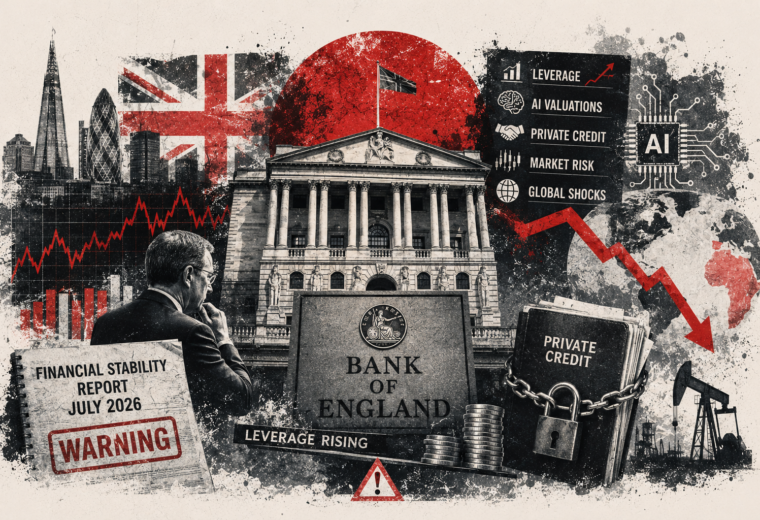
While the MPC grapples with the immediate interest rate decision, the Bank’s Financial Policy Committee (FPC) is simultaneously addressing the long-term structural resilience of the UK banking sector. In its July 2026 Financial Stability in Focus report, the FPC, working in tandem with the Prudential Regulation Authority (PRA), announced a comprehensive package of proposed changes intended to modernise the bank capital framework. The primary objective is to create a system that is simpler, more effective, and better calibrated to the multifaceted risks of the modern financial system, ensuring that banks can continue to support the real economy even during periods of severe stress.
A central component of this reform is enhancing the usability of regulatory capital buffers. Historically, while capital buffers were designed to absorb losses and support continued lending during economic downturns, banks have often exhibited a reluctance to utilise them in practice, fearing market stigma or regulatory backlash. To rectify this, the Bank is moving toward a framework centred on a single releasable buffer. As an initial step, the PRA intends to make the other systemically important institution (O-SII) buffer releasable during systemic stress events. This is a crucial technical adjustment aimed at reducing the incentive for major banks to abruptly cut off lending (deleverage) when the economy faces a shock. By providing clearer guidelines and strengthening market understanding of how and when these buffers should be deployed, the Bank hopes to foster a more resilient and counter-cyclical financial system. This reform is particularly timely, given the compounding threats of energy volatility and geopolitical instability.
The Long Shadow of Climate Economics
Beyond the immediate horizons of interest rates and capital buffers, the Bank of England is increasingly focused on the most profound systemic threat of the 21st century: climate change. A landmark report published in early July 2026 delivered a chilling assessment of the UK’s economic future under various warming scenarios. According to the research, the UK economy faces catastrophic damages equivalent to 10 per cent of its gross domestic product by the year 2100 if global warming reaches 4°C above pre-industrial levels. Even existing warming has already reduced UK welfare by approximately 2 per cent of GDP, manifesting in extreme weather disruptions, infrastructure damage, and supply chain vulnerabilities.
The economic modelling highlights that half of the projected long-term damages would stem from direct catastrophic impacts, such as rapid sea-level rise and extreme weather events. The remainder would be driven by “spillover effects”—the economic contagion resulting from climate-induced disruptions in other countries that severely impact UK trade and labour productivity. The Bank of England has proactively responded to this reality by altering its collateral framework to account for climate-related risks, aligning its operations with the expectations of the Network for Greening the Financial System (NGFS). The NGFS has explicitly warned that climate disasters could dent global economic growth by up to 3 per cent within the next five years alone. For the Bank of England, the mandate is clear: physical climate risks and the transition to a net-zero economy are no longer abstract environmental issues; they are core components of financial stability and price stability.
The Convergence of Crises
The economic posture of the UK in July 2026 is defined by the inescapable convergence of short-term volatility and long-term systemic transformation. The Bank of England is forced to operate simultaneously across entirely different time horizons. On one front, it must decide whether to deploy a blunt monetary instrument—a July rate hike—to defend against a sudden spike in gas and oil prices. On another front, it is meticulously rewriting the regulatory code for the banking sector to ensure capital liquidity during future crises. And overarching both is the slow-moving but devastating reality of climate economics, which threatens to permanently erode the nation’s wealth if aggressive mitigation and adaptation strategies are not pursued.
For businesses, investors, and policymakers, the message from Threadneedle Street is unambiguous. The era of predictable, single-variable economic forecasting is over. The UK economy must adapt to a permanent state of polycrisis, where geopolitical energy shocks, inflation, and environmental degradation are deeply intertwined. How the Bank of England navigates this July will set the tone for the remainder of the decade, testing the limits of its institutional wisdom and the resilience of the British economy.