
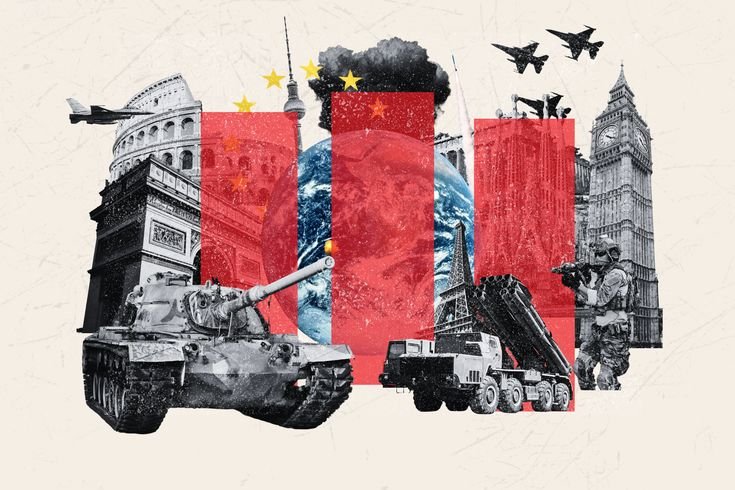
The 5 per cent target was agreed at The Hague in 2025, but Ankara has turned it into an operational test: can Europe and Canada convert defence promises into factories, missiles, resilience and credible deterrence before the strategic window narrows?
The real significance of NATO’s Ankara summit is not that allies discovered a new threat. They have understood the deterioration of the security environment for years. The real significance is that NATO is now being forced to translate fear into budgets, budgets into contracts, contracts into production, and production into deployable capability.
That is a much harder task than issuing a declaration.
The 5 per cent defence target did not originate in Ankara. The formal commitment was made at the 2025 NATO Summit in The Hague, where allies agreed to invest 5 per cent of GDP annually on defence by 2035. NATO defines this as two categories: at least 3.5 per cent of GDP for core defence requirements and up to 1.5 per cent for defence and security-related spending, including critical infrastructure, networks, civil preparedness, innovation and the defence industrial base.
Ankara matters because it has exposed the difference between a political target and an industrial reality. A summit can announce ambition. It cannot automatically create artillery shells, air defence interceptors, drone fleets, cyber resilience, shipyard capacity, trained personnel or strategic stockpiles. The alliance is entering the uncomfortable phase where numbers must become metal.
The 5 Per Cent Target Is Really Two Tests
The headline figure is 5 per cent, but the intelligence reading must separate it into two tests.
The first is the traditional military test: can allies fund combat power? That means personnel, ammunition, air defence, naval forces, logistics, long-range fires, armour, intelligence assets, cyber capability and readiness. The 3.5 per cent core defence requirement is the harder military measure because it goes directly to NATO capability targets.
The second is the resilience test: can states survive pressure before war, during crisis, and after disruption? The additional 1.5 per cent category includes civil preparedness, infrastructure, networks, innovation and the defence industrial base. This matters because modern conflict does not begin only when tanks cross borders. It begins with cyber attacks, energy pressure, supply chain disruption, disinformation, port vulnerability, undersea cable risk, and pressure on public confidence.
This is why the 5 per cent debate is not just a defence debate. It is a state-capacity debate.
SIPRI has warned that the new target is a major political signal with serious fiscal and operational implications. It more than doubles NATO’s previous 2 per cent guideline, and SIPRI notes that the average military burden for NATO members in 2024 was around 2.2 per cent of GDP. Moving from that level to 3.5 per cent core defence, and potentially 5 per cent overall, implies a scale of adjustment that many governments have not had to consider since the Cold War.
The target therefore has two meanings. Publicly, it is a message to Russia and other adversaries that NATO is prepared to spend. Privately, it is a message to European electorates that the old peace dividend is over.
Ankara and the American Question
The Ankara summit has also sharpened the alliance’s deepest strategic anxiety: the future reliability of American protection.
According to AP, NATO leaders in Ankara renewed their vow to defend one another and declared that their Article 5 pledge remains “ironclad.” The same reporting noted that the summit unfolded amid renewed criticism from President Donald Trump toward allies and questions over his commitment to NATO.
For NATO, that combination is important. The formal treaty commitment remains. The political atmosphere around that commitment has changed.
The Guardian’s defence reporting from Ankara framed the issue bluntly: Europe increasingly recognises that it cannot rely on the United States as easily as before. The report noted that many allies were eager to show increases in military spending after the previous summit’s commitment to move toward 5 per cent of GDP by 2035.
This is the Ankara imperative: Europe does not have the luxury of waiting for perfect certainty from Washington. It must prepare for a world in which the US remains inside NATO, but is less willing to carry the disproportionate burden of European security. That does not mean the transatlantic alliance is dead. It means European members must become much more serious within it.
For the UK, Germany, France, Italy, Spain and smaller European allies, the question is no longer whether defence spending should rise. The question is whether the rise will produce real military output or simply inflate defence budgets without solving capability gaps.
That distinction is central. A country can spend more and still fail to deter if money is absorbed by personnel costs, fragmented procurement, delayed platforms, poor maintenance, duplicated national programmes and weak stockpiles. Deterrence is not an accounting line. It is the visible ability to fight, sustain and replace losses.
The New Industrial Reality
The most important battlefield before any battlefield is the factory.
Ankara included a NATO Defence Industry Forum on the sidelines of the summit, with NATO defence ministers and industry representatives present. AP images from the summit identified NATO Secretary-General Mark Rutte with defence ministers and industry figures during the opening of that forum. That detail is not decorative. It reveals the strategic centre of gravity.
NATO’s problem is no longer only military readiness. It is industrial readiness.
The Ukraine war has already demonstrated the brutal arithmetic of modern high-intensity conflict. Missiles are consumed faster than they are produced. Air defence systems become strategic currency. Ammunition stockpiles that looked sufficient in peacetime can disappear rapidly under wartime demand. Drones move from niche asset to mass battlefield necessity. Electronic warfare becomes daily infrastructure. Repair, replacement and adaptation matter as much as initial equipment quality.
This is why the defence industrial base sits explicitly inside NATO’s 5 per cent framework. The Hague declaration allowed the additional 1.5 per cent to include spending that strengthens the defence industrial base, alongside infrastructure, networks and resilience.
For Europe, this requires a cultural change. Defence procurement has often been slow, national, bespoke and politically protected. Each state has preferred its own champions, its own specifications and its own industrial returns. That approach may support national prestige, but it damages speed and scale.
The new reality demands standardisation, joint procurement, long-term contracts and production depth. Companies will not build new factories on the basis of one-year political promises. They need multi-year demand signals. They need governments to commit to buying not dozens, but thousands. They need clarity that replenishment is no longer an emergency exception but a permanent operating model.
In other words, NATO must move from boutique defence production to strategic manufacturing.
The Fiscal Collision Ahead
The 5 per cent target also creates a domestic political collision.
SIPRI’s analysis highlights the scale of adjustment. It notes that moving all NATO allies to 3.5 per cent of GDP for core defence by 2035 would require far higher annual spending than in 2024, while a full 5 per cent burden would imply an even larger total. SIPRI also warns that many NATO member states face difficult debt and fiscal sustainability conditions.
This is where defence policy becomes domestic politics.
European governments are already under pressure from ageing populations, healthcare costs, housing strain, infrastructure needs, energy transition demands and public debt. A permanent defence increase is not funded by speeches. It is funded by taxation, borrowing, spending cuts, or a combination of all three.
The political difficulty is that defence spending is most popular when danger feels close, but least popular when trade-offs become visible. Voters may support stronger security in principle. They may resist reduced welfare spending, delayed infrastructure projects or higher taxes in practice.
That is why leadership matters. If governments present the 5 per cent target as a payment to NATO bureaucracy, it will fail politically. If they explain it as a national resilience programme, defending energy, ports, cyber systems, airspace, supply chains and democratic stability, it has a stronger chance of public acceptance.
The second framing is also more accurate. The 5 per cent commitment is not purely about tanks and fighter jets. NATO’s own structure includes civil preparedness, networks and critical infrastructure.
The Capability Gap Cannot Be Solved by Money Alone
The central intelligence judgement is this: the 5 per cent target is necessary but insufficient.
It is necessary because Europe’s old defence posture was built on assumptions that no longer hold. Russia’s war in Ukraine, instability around the Middle East, cyber threats, and uncertainty in US politics have all exposed the danger of relying on low stockpiles, slow procurement and American overmatch.
But it is insufficient because money without reform will not create deterrence.
NATO needs better readiness, but also better procurement discipline. It needs industrial capacity, but also raw material security. It needs new weapons, but also trained personnel. It needs advanced systems, but also ammunition depth. It needs cyber capability, but also civil resilience. It needs European self-reliance, but without destroying alliance interoperability.
The alliance has faced spending debates before. The 2 per cent target became a symbol of burden-sharing after 2014. The 5 per cent target is different. It is not only about fairness between America and Europe. It is about whether democratic states can still mobilise industrial power at speed.
That is a harder question, and Ankara has placed it in front of every capital.
The Prudent Assessment
The Ankara summit should be read as the operational sequel to The Hague. The Hague created the number. Ankara exposed the consequences.
The 5 per cent target is not simply a budgetary aspiration. It is a strategic audit of the Western state. It asks whether governments can build, coordinate, procure, store, protect and sustain at the level required by a deteriorating world.
For Britain, the implication is direct. The UK cannot treat NATO’s target as a distant continental issue. Its own security depends on maritime access, undersea cables, energy infrastructure, air defence, cyber resilience, industrial capacity and the credibility of Article 5. The British debate must therefore move beyond whether defence spending should rise. It must ask what kind of defence economy the country is prepared to build.
A serious state does not discover its supply chain during a crisis. It maps it beforehand. It does not wait for ammunition shortages before signing production contracts. It does not confuse strategic autonomy with anti-Americanism. It does not mistake alliance membership for outsourced security.
The Ankara imperative is clear: deterrence now depends on industrial seriousness.
NATO’s 5 per cent target is the beginning of that seriousness, not the proof of it. The proof will come later, in factories opened, stockpiles rebuilt, systems delivered, infrastructure hardened, and allies able to act before panic sets in.